In the services world, there’s a persistent belief that holds many companies back: the idea that being better at what you do is enough to grow. That quality speaks for itself. That word of mouth will come naturally. That the market will recognize the effort.
It doesn’t work that way.
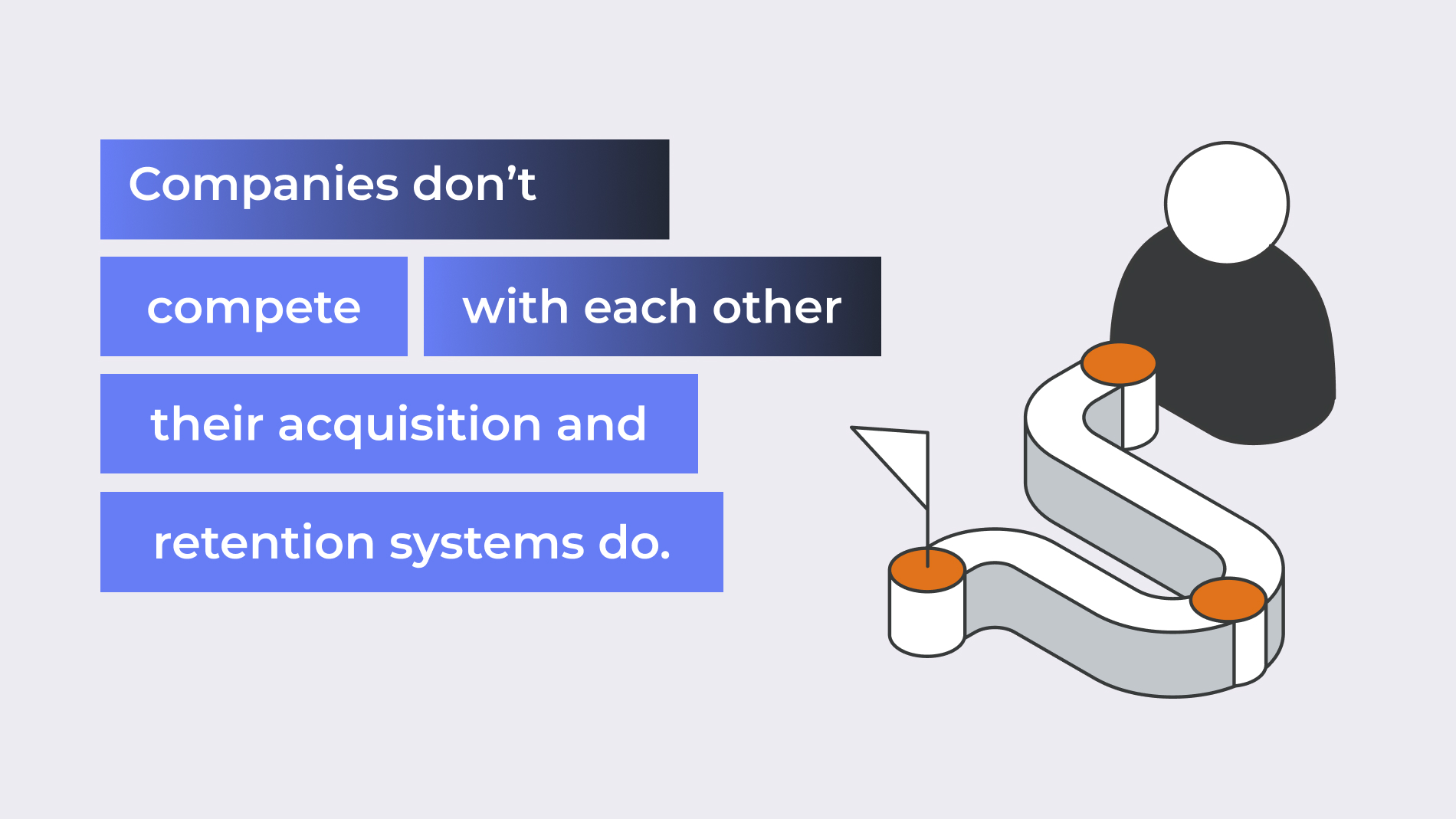
Service companies don’t compete against each other. Their acquisition and retention systems do.
Two consulting firms can offer identical services in terms of quality, pricing, and talent. The one that grows is the one with a system that consistently attracts, converts, and retains clients. The other—no matter how “good” it is—ends up waiting.
The System Is the Product
What does it mean to have a growth system? It means every stage of the customer lifecycle is designed, automated, and optimized:
- Acquisition: paid campaigns, demand-generating content, integrated CRM, lead scoring. You don’t wait for customers to show up—you go out and get them.
- Onboarding: welcome emails, tutorials, chatbots. The first post-sale interaction determines whether a customer stays or leaves.
- Conversion: landing pages that remove friction, simulators, A/B testing. Every touchpoint should reduce uncertainty and accelerate decision-making.
- Retention: value-driven newsletters, loyalty programs, proactive follow-ups. A customer who stays and refers others is the most valuable asset you have.
The integration of AI and intelligent automation across each of these stages is not a luxury—it’s what allows the system to scale without relying exclusively on people.
From Funnel to Flywheel
For decades, the dominant model was the funnel: attract, convert, done. The customer reached the bottom, and the cycle ended.
The problem is that this model ignores the most powerful asset any service company has: a satisfied customer.
The flywheel—popularized by companies like Amazon and HubSpot—replaces that linear logic with a cycle. Every well-served customer generates momentum. They refer, return, and advocate. The system feeds itself and grows on its own.
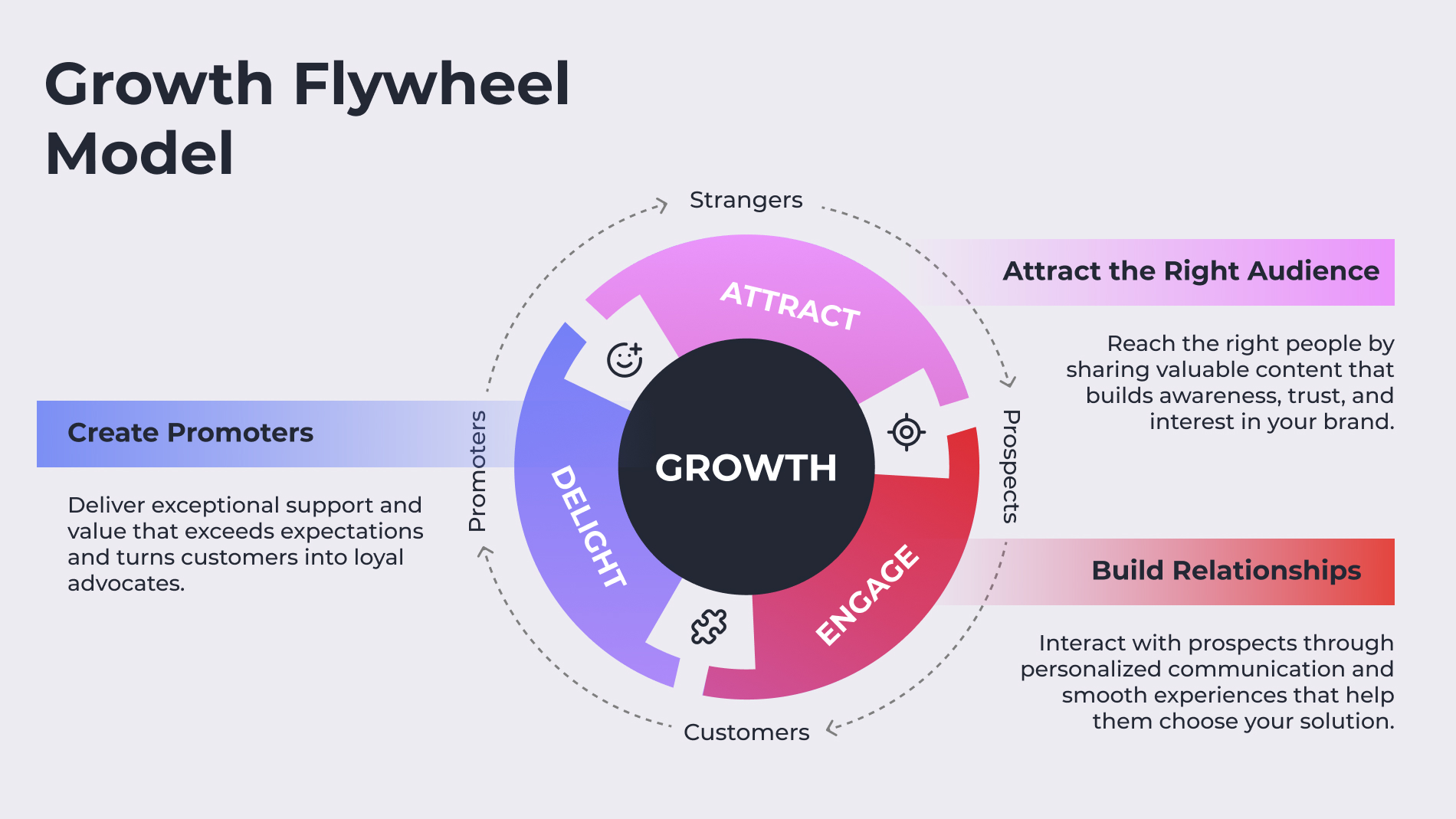
Friction is the enemy. Every bureaucratic process, every slow response, every inconsistent experience is lost energy that slows the cycle down.
Go-to-Market and CRO as System Pillars
A well-built Go-to-Market strategy isn’t just about launching a service. It’s the blueprint that defines who your ideal customer is, how to reach them, what to say, and how to measure success. Without GTM, marketing efforts become scattered and expensive.
CRO, on the other hand, ensures that the traffic and leads you generate don’t go to waste. There’s no point in driving thousands of visitors to a landing page that doesn’t convert, or booking sales meetings that fall apart due to a poorly structured proposal.
Together, GTM and CRO form the backbone of any robust acquisition system.
Where to Start
You don’t need to build the entire system at once. Start by identifying where the biggest leak is:
Are you generating leads that don’t convert?
Are customers not coming back?
Is onboarding chaotic?
That friction is exactly where you should act first.
At Qm, we focus on what truly drives growth: the system. From Go-to-Market strategy to optimizing every touchpoint—acquisition, conversion, and retention—we design structures that enable consistent, scalable growth, not growth that depends on chance.
Because it’s not just about generating more leads—it’s about building a system that converts them, retains them, and turns them into sustainable growth.
If this article resonated with you, explore more perspectives on Go-to-Market, CRO, RevOps, and Growth in our blog Insights—built for teams that want to create systems, not rely on isolated results.